




Replacement Number Plate for MINI
Mini's UK range now splits sharply between petrol and electric, and that split changes which number plate finish actually suits each model. This guide covers every current and recently discontinued Mini, a finish-by-model suitability table, the real BS AU 145e spec numbers, green flash eligibility, fitting, care and the mistakes owners make most often ordering a replacement Mini number plate.
Which Mini Models Need a Replacement Number Plate?
Mini's current UK range covers six body and powertrain combinations, plus two discontinued models still common enough to matter. The Cooper hatch is sold as a 3-door and 5-door, with a petrol line-up (Cooper C, Cooper S, Mini One) alongside a separate electric line-up badged Cooper E and Cooper SE. The Aceman crossover is electric only. The Countryman, Mini's largest model, comes as petrol C and S, and electric E and SE. The Clubman and Convertible are both discontinued (Clubman ended February 2024) with no successor, but both stay common on UK roads, and a Mini number plate order for one is a routine request.
None of these eight variants need a different plate size. Every Mini number plate we make is built to the same 520mm x 111mm dimensions front and rear, the standard size for the vast majority of UK cars.
Mini Number Plate Sizes and the BS AU 145e Rules, Explained
Every legal Mini number plate, regardless of finish, sits within the same character rules in BS AU 145e: 79mm character height, 50mm character width (1 and I are narrower by design), 14mm stroke width, 11mm spacing between characters, a 33mm gap before the age identifier, and 11mm margins. The front plate uses a white retroreflective background, the rear a yellow one, and characters must be a single solid black shade, never two-tone or gradient. Every plate we dispatch carries the supplier's name and postcode, a legal requirement rather than a design choice, whatever style you pick from Standard through to Black Diamond. Full detail is in our BS AU 145e explainer, sourced from gov.uk.
Which Number Plate Finish Suits a Mini? (Suitability Table)
Mini's design language leans on retro cues (round headlights, a short overhang, a low, sporty stance on the Cooper hatch) alongside a genuinely modern EV line-up on Aceman and the electric Cooper and Countryman variants. That split matters more for finish choice than most guides admit. The table below is our honest, model-by-model recommendation, not a generic "any finish works" answer.
| Mini model | Recommended finish | Why it suits this car | Who it's wrong for |
|---|---|---|---|
| Cooper 3/5-door petrol (Cooper C, Cooper S, Mini One) | 3D Gel or 4D (3mm) | Suits the Cooper's rounded, heritage front end with a raised, glossy character that doesn't overwhelm a small car | Weekly close-range hand-washers, given the Cooper's low front bumper (see below) |
| Cooper Electric (E, SE) | Standard with optional green flash, or 3D Gel | EV buyers often want a factory-subtle look plus a visible zero-emission marker | Owners chasing the boldest show look, better served by 4D Gel or 5D Gel without the flash |
| Aceman (electric only) | 4D Gel (3mm) | Taller crossover stance lifts the plate further from the road, reducing jet-wash exposure while suiting its bolder styling | Buyers wanting a minimalist, blacked-out look, better served by Standard or Black Diamond |
| Countryman petrol (C, S) | 4D (5mm) or Black Diamond | Mini's largest, most SUV-like model carries a deeper finish well, with a higher mounting further from kerbs and splash zones | A high-mileage family car taking regular knocks from boots and pushchairs, where Standard is more practical |
| Countryman Electric (E, SE) | Standard or 3D Gel with green flash | Same practicality logic as the petrol Countryman, plus genuine green flash eligibility | Owners planning to sell within a year or two, where a premium finish adds cost with little resale benefit |
| Clubman (discontinued Feb 2024, still common) | Standard | Most owners now just need a durable, correctly specified replacement for a lost or faded plate | An owner keeping a well-kept Clubman as a showpiece, who may prefer 5D Gel instead |
| Convertible (discontinued) | 3D Gel | A modest step up suited to a car driven for enjoyment, without a deeper finish's added edge-wear risk | Cars kept in coastal or salted-road areas, where flat Standard is easier to keep looking new |
On price, moving up the range isn't a huge jump: Standard is £25 a pair, 3D Gel and 4D (3mm) are both £38 (a £13 step up for a raised or gel character), 4D (5mm) is £50, 4D Gel (3mm) is £54, 5D Gel (5mm) is £64, and Black Diamond is £60 at its current introductory price, usually £75. For most Mini owners, the decision is less about budget and more about how the car is used and washed.
What Does a Raised Mini Number Plate Finish Actually Look Like Up Close?
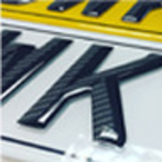
The BS AU 145e character height of 79mm doesn't change with finish, but the depth a character stands proud of the plate does, and that's where the real trade-off sits. A 3mm acrylic character (3D Gel, 4D 3mm, 4D Gel) stands roughly as proud as two 10p coins stacked, enough to catch light and read as premium at arm's length. A 5mm character (4D 5mm, 5D Gel) is closer to three 10p coins, a genuinely deeper shadow line that's more obvious in photos and under headlights. On a car the size of a Mini, with a front bumper sitting noticeably lower than a Countryman or a typical SUV, that raised edge is also the first thing a close-range jet wash lance or stiff hand-wash brush will catch on. It isn't a fault, it's a physical consequence of a raised edge existing at all, worth knowing before you choose rather than after the edge starts to look tired.
Are Any Mini Models Eligible for a Green Flash Number Plate?
Only genuinely zero-emission models qualify, meaning the Cooper Electric (E and SE), Countryman Electric (E and SE), and the Aceman, sold exclusively as an EV. Petrol Cooper and Countryman models, and both discontinued Clubman and Convertible generations, were never offered as hybrids or plug-in hybrids, so there's no ambiguity there. The flash is entirely optional and purely visual, not a legal requirement, and any low-emission-zone benefit depends on the local council scheme, so we'd never promise a set saving. Full detail is in our green number plate guide.
Two Real Mini Number Plate Scenarios Worth Reading Before You Order
A Cooper SE owner living in an outer London borough bordering the ULEZ, commuting into a neighbouring zone a few days a week, is a genuinely common green flash customer. The plate itself won't change what they're charged, that depends entirely on the scheme rules for their route, but it marks the car out at a glance as zero-emission, useful when parking in bays that prioritise EVs. It's a cosmetic choice on top of an already-compliant vehicle, not a compliance requirement in itself.
A second, equally common scenario: someone buying a used Clubman privately, finding the existing plates faded, cracked, or missing the required supplier detail. There's no green flash question here, since the Clubman was never sold as an EV, and no finish debate either, since most buyers just want a durable Standard replacement, V5C logbook or new keeper supplement ready before ordering.
Who Should Think Twice Before Choosing a Raised Mini Number Plate Finish?
If you wash your Mini by hand every week, standing close to the front bumper with a pressure washer or a stiff brush, a raised 4D or 5D finish is genuinely the wrong choice on the Cooper hatch specifically, given how low that front recess sits compared with the Countryman. The raised edge that makes 4D and 5D look premium in photos is the same edge repeated pressure-washer contact finds hardest, and over a couple of years of close-range washing it shows wear sooner than a flat Standard or gently domed 3D Gel plate. Plenty of owners wash less aggressively, so this isn't a reason to avoid raised finishes altogether, just a reason to be honest about your routine before spending extra on depth you'll be working against every weekend.
How to Fit a Number Plate on a Mini Cooper, Aceman or Countryman
Start by removing the old plate: Mini holders use either standard screws or push-fit clips depending on model year, so check which before reaching for a screwdriver. Once it's off, check the recess for old adhesive residue or debris, since a plate seated on residue won't sit flush. Position the new plate centrally, checking it sits level before committing to screws or pads. If the original holder used screws, stick with screws, more reliable on Mini's textured bumpers, where pads can lift in cold weather. On a gel or raised acrylic finish, avoid overtightening screws near mounting holes closest to a domed character, one of the few ways a gel edge cracks during fitting rather than through wear. Full step-by-step photos are on our fitting guide.
How to Clean and Care for 3D, 4D and Gel Number Plates on a Mini
A flat Standard Mini number plate can be jet washed at normal range without much thought. A 3D Gel, 4D or 5D Gel plate is more sensitive to close-range, high-pressure contact and to abrasive sponges dragged across a raised edge, which dulls the gloss faster than ordinary washing. Warm water and mild car shampoo, applied by hand or at normal wash distance, is enough for every finish we sell. If your Mini lives outdoors year-round, gel-coated finishes can show slight UV yellowing after several years, more than an uncoated finish like Standard, plain acrylic 4D, or Black Diamond's resin-free characters, a genuine trade-off between gloss and long-term colour stability, covered further in our plate cleaning and maintenance guide.
Common Mistakes Mini Owners Make When Ordering Number Plates
The most frequent one is choosing a deep raised finish for a Cooper hatch that gets a weekly close-range hand wash, covered above, easily avoided by being honest about your washing routine first. The second is misunderstanding the supplier postcode requirement: the postcode on every legal plate is the supplier's, not the customer's, and some buyers assume they need to supply their own address. The third is ordering a green flash for a Countryman without checking whether it's electric or petrol, since the badges look similar at a glance. The fourth is ordering without the V5C logbook or new keeper supplement to hand, the single most common cause of a delayed order. More general mistakes are in our common number plate mistakes guide.
Mini Number Plates: Our Verdict
For most Cooper hatch owners, 3D Gel is the finish we'd point you to: it lifts the retro-styled front end without the deeper raised edge a close-range wash finds first. Countryman owners with a busy family car are better served sticking with Standard or 4D (3mm) rather than paying for depth a muddy boot will knock into sooner than on a Cooper. Aceman and Cooper Electric buyers wanting a modern look with a genuine green flash should go Standard or 3D Gel with the flash added. If you've picked up a used Clubman or Convertible needing a working replacement, don't feel you need to spend beyond Standard, that's exactly what it's built for.
Why buy from Legal & Show Plates
We're rated 5.0 on Google from over 300 reviews and 4.6 on Trustpilot. Order before 2pm for same-day dispatch, with a tracked 24-hour Royal Mail option available.
Mini Number Plates: Frequently Asked Questions
Q: Can I put a green flash number plate on a Mini Cooper Electric?
Yes. The Cooper E and Cooper SE are genuine zero-emission models, so both qualify for the optional green flash. Petrol Cooper C, Cooper S and Mini One models don't, since the flash is reserved for fully electric vehicles, never hybrids or plug-in hybrids.
Q: What size number plate does a Mini need?
Every Mini we supply, whatever the model or finish, uses the same 520mm x 111mm size front and rear, the standard UK size across the whole range, Aceman and Countryman included.
Q: Is a 4D number plate legal on a Mini?
Yes, provided it's built in standard road-legal spacing to BS AU 145e. Acrylic depth (3mm or 5mm) doesn't affect legality, it's a styling choice. See our 3D vs 4D comparison for more.
Q: Can I still get a replacement number plate for a Mini Clubman now it's discontinued?
Yes. Discontinuing a model doesn't affect the legal need for a compliant plate, and a Standard replacement is one of our routine Mini orders.
Q: Do all Mini models need the same number plate?
They all need a plate built to the same BS AU 145e size and spec. Finish is a personal choice that varies sensibly by model, exactly what the suitability table above sets out.
Q: How much extra does a gel number plate cost over a Standard one on a Mini?
3D Gel is £38 a pair against Standard's £25, a £13 step up. 4D Gel (3mm) is £54, and 5D Gel (5mm), our deepest and glossiest option, is £64.
Q: Will a raised number plate finish get damaged by my Mini's low front bumper?
Not from the bumper height itself, but from how close and how forcefully you wash near it. A raised character on the Cooper hatch's low front recess is more exposed to a close-range jet wash than the same finish on a taller Countryman.
Q: Do I need proof of ownership to order a Mini number plate?
Yes. A V5C logbook or new keeper supplement is required before we dispatch any road legal replacement Mini number plate.